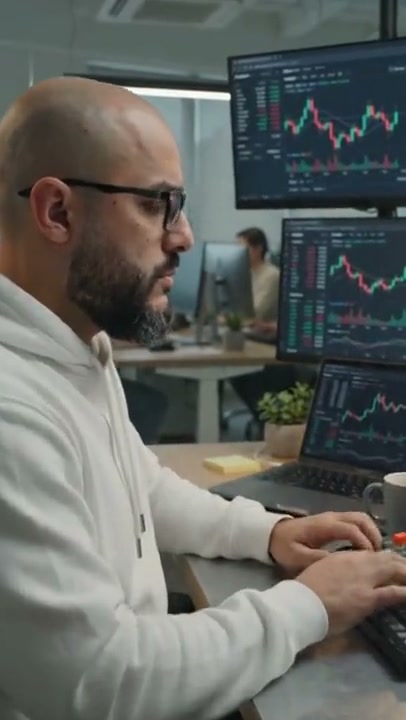
A few weeks ago I started publishing short videos of myself, actually recorded by my artificial intelligence avatar. The reason is simple and not at all glamorous: I need to master this tool before proposing that it enters the recurring productions I run at work. I am in the middle of launching my book about marketing in the AI era, so I use that personal project as a test bench. Every mistake I make here is a mistake I will not make there.
Why train on a personal project before taking it to the team
There is a big difference between watching a tutorial about a tool and operating that tool responsibly. When the content is mine, the risk is mine. I can experiment with timing, facial expression, voice and setting without compromising anyone's brand and without burning an approval workflow. It is an environment where I can fail fast and cheap. Once the method is mature, I take it into the corporate structure already tested.
This path also gives me material for the internal conversation. Instead of arriving saying "I read that you can make avatars with AI", I arrive with a published video, retention data, real cost per production and a mapped learning curve. The conversation changes completely when the argument comes with evidence rather than a promise.
What is being tested in the book videos
Every video I publish has a technical function beyond promoting the book. I am validating the avatar's fidelity to my image and my voice, lighting consistency between scenes, the limit of facial movement that keeps it natural, the maximum speaking time before the avatar loses expression, and the integration between synthetic voice and burned-in subtitles.
Each published piece is a controlled experiment. I change one variable at a time and watch the result. When a video performs well, I record what was right. When it performs badly, I record what was wrong. It is a learning spreadsheet built quietly while external communication moves at its normal pace.
The discovery that changed my workflow: eight-second scenes
The most practical rule that came out of this process was the eight-second limit per scene. Scenes longer than that tend to break the avatar's naturalness, lose viewer retention and blow past the technical limit of several AI generation platforms. Today I write the script already thinking in blocks of around twenty words, which is what fits into eight seconds of natural narration in Portuguese.
That restriction, which at first looked like an annoying limitation, became a quality criterion. Text that does not fit into eight seconds per scene is, in most cases, text with flourish. When I tighten the word count, the message gets more direct, the video gets better rhythm and the avatar gets more convincing.
Where this is going: replacing static with video in recurring communications
The final intent of the cycle is clear. At work, I produce a considerable volume of posts that are currently static images with text, repeated on a weekly or fortnightly cadence. Once the avatar method is consolidated, those formats can migrate to video with little additional production cost and a consistent gain in engagement and perceived closeness.
The transition is not a whim. The barrier that existed until recently, recording and editing video with quality, has fallen. Anyone still communicating only with static images in 2026 is using a channel the audience already considers dated. And the most responsible way to make that migration is the one I am describing here: test outside before applying inside.
Next step
If you are a marketing manager, it is worth considering the same move. Use a project of your own, whatever it is, as a test bench before touching the main machine. The method can be the same as mine or a different one, but the logic of learning at low risk before taking it into the corporate environment avoids a good part of the frustration I see in the routine of people who tried the shortcut.
About the book: it details this and other practical shifts redrawing marketing at this turning point. It is written in Portuguese. The next videos in this series keep coming out here.